Minotaur Review

Minotaur is a remake, but it’s not really a remake. A large part of the plot of Andrey Zvyagintsev’s film is taken from Claude Chabrol’s 1969 classic The Unfaithful Wife, in which a well-to-do husband, Charles (Michel Bouquet), discovers his wife Hélène (Stéphane Audran) is having an affair, and … deals with the situation.
But the 1969 movie is only 94 minutes long, and Minotaur is 141. The plot that fills that extra duration is what makes it a very different film. In Zvyagintsev’s spin on the tale, the husband, Gleb (Dmitry Mazurov), is a Russian industrialist who has been told by the town’s mayor (Vladimir Friedman) that he needs to provide the names of 14 of his least necessary employees so they can be sent to fight Russia’s war on Ukraine. While Gleb is quick to confront his personal problem, sending the 14 men (that ‘tribute’ is how Minotaur gets its title) proves more of a challenge.
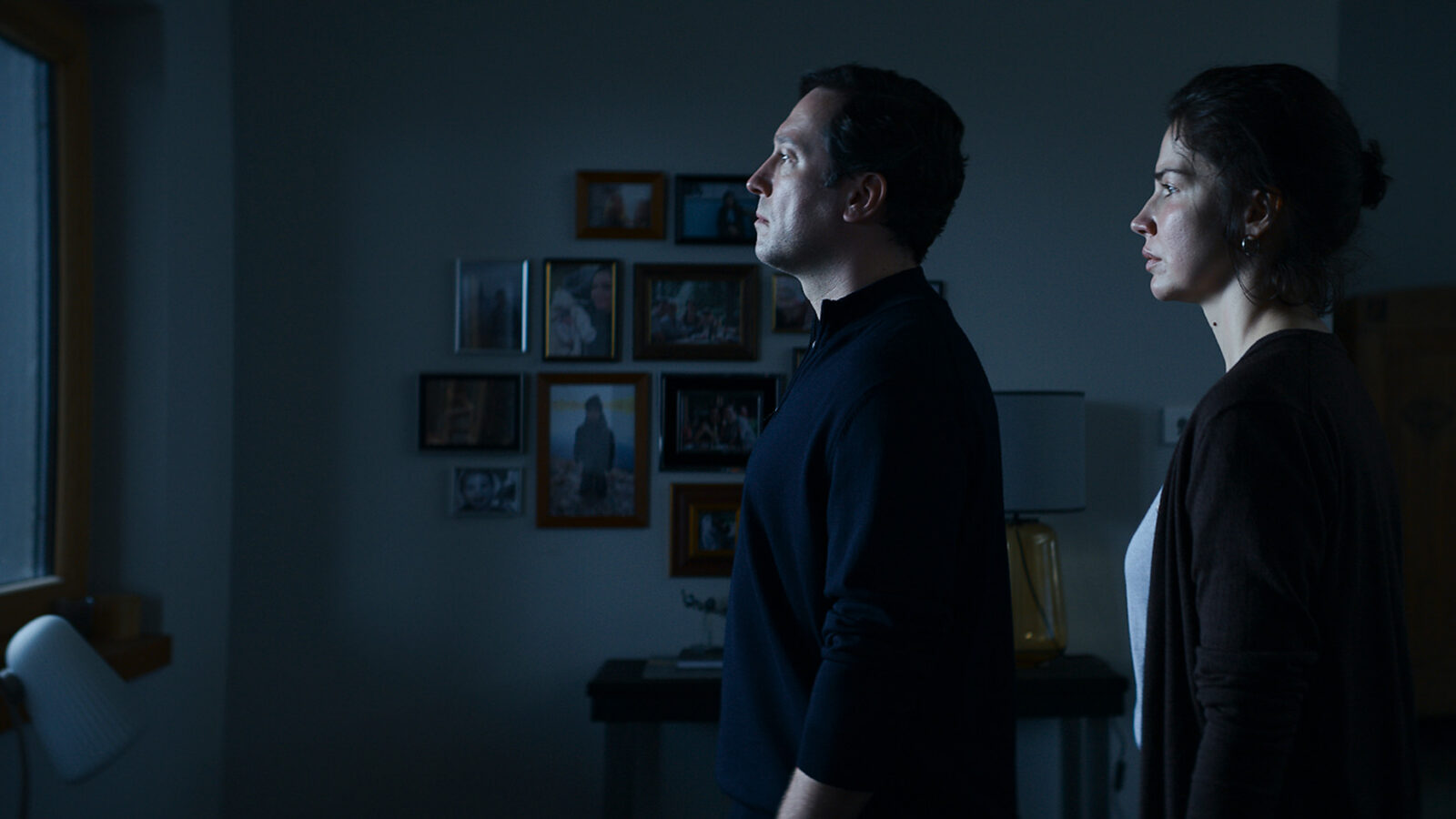
Zvyagintsev is an exacting director, and all his frames, as austere as they are in the predominantly grey-blue colour palette, are beautifully composed. That kind of directorial rigour is a fitting treatment for this chilly world, where no-one seems to be having a good time; one prolonged sequence in which Gleb and his wife Galina (Iris Lebedeva) hit the town with their other couple friends is just as joyless as the meeting where Gleb is first assigned his arduous task by the mayor.
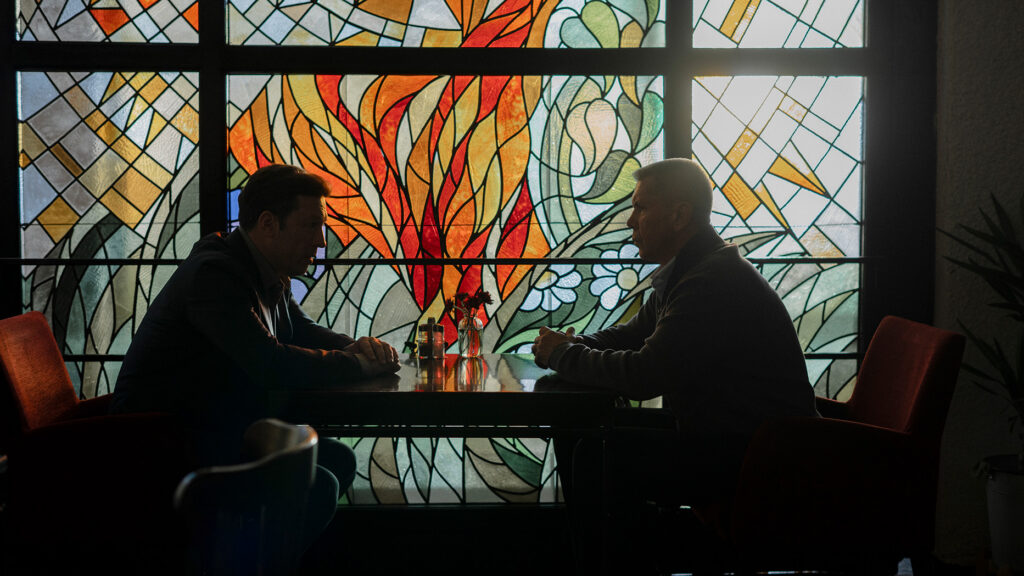
Although the infidelity plot is almost beat-for-beat identical in both versions up until the very end, in the Chabrol film, there is a warmth, and more of an intriguing ambiguity as to the precise nature of the marital relationship, playing out memorably in Hélène’s Mona Lisa expression. The pivotal sequence where the husband meets the lover is agonising and textured, a battle being fought on a hundred fronts at once under the veil of politesse. In Minotaur, that meeting is over quickly and cleanly, and unfaithful wife Galina says just what she’s thinking about her marriage in an anguished monologue. Though it’s a whole lot longer, it’s less happy to rest in moments, to let the audience wonder.
In Minotaur, both the infidelity narrative and the war narrative swirl into each other to make a damning central point about the way that Russia’s wealthy are able to gracefully glide over the events that are affecting everyone else and not be subject to the same suffering; a potent final scene, both ethereal and monstrous, really drives that point home. As one of the only Russian films to be released in recent years that actually confronts Putin’s war head on, that message is particularly effective (Zvyagintsev has been added to the county’s list of “foreign agents”, for his troubles).
And yet, everything in the film working in service of that message, as valid as it is, does add to Minotaur’s sense of suffocating bluntness. As such, while it is an impressive production in many ways, it’s one that’s easier to appreciate than it is to enjoy.
★★★