Susie Tate: Why Dukes Work In Contemporary Romance

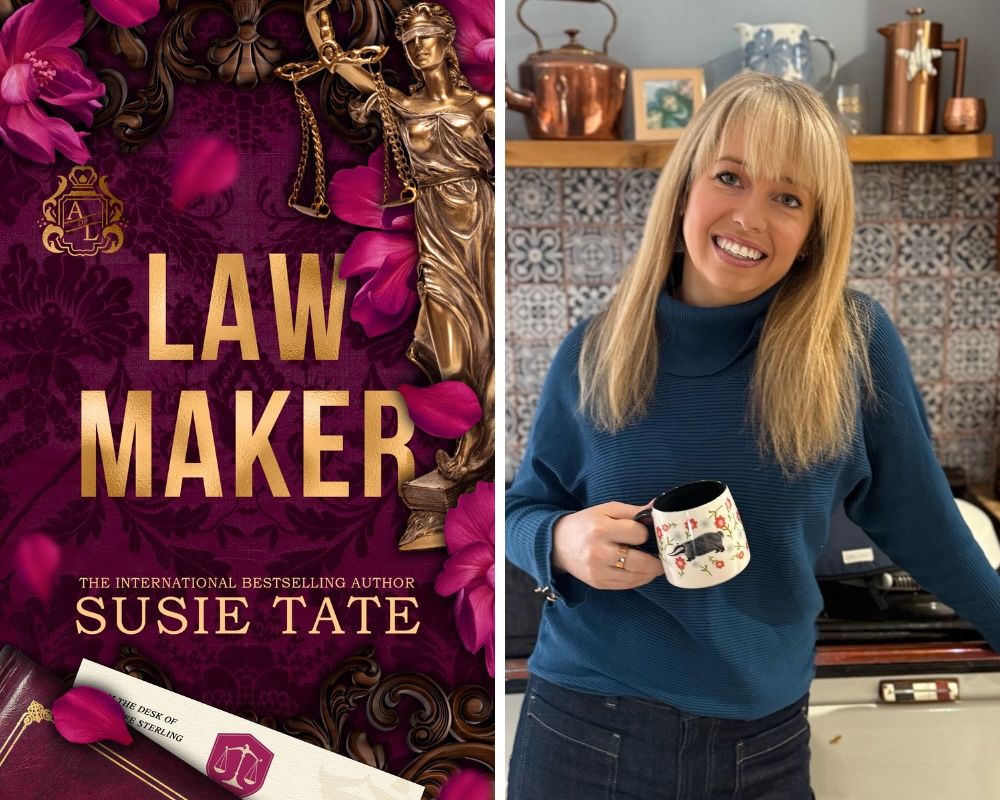
I love the power dynamics of a good billionaire romance, and as my books are based in the UK, it was inevitable that I would start writing about the aristocracy. Because if you’re looking for where the real power lies in this country – and has done for centuries – you should look no further than the hereditary peerage.
Dukes, lords, earls and marquesses make for the perfect romance heroes. However, I will admit that even though I live in England myself, I wasn’t convinced of this fact until I did a deeper dive for my research when writing my three-book Aristocrats of London series.
There is sometimes a perception of noble poverty and leaking ancestral homes around the British aristocracy – of titles that mean you’re a bit posh but carry very little real power. In reality, a small number of aristocratic families, equating to just a few thousand people, still own at least a quarter of England between them – and that’s a conservative estimate. A significant chunk of English land has never even been formally registered, and historians studying it think most of the unaccounted-for portion is old aristocratic estates that have simply never needed to be sold. Individual dukes still sit on landholdings measured in the hundreds of thousands of acres.
Right up until this year, ninety-two hereditary peers still sat in the House of Lords by right of birth – a transitional arrangement from 1999 that somehow lasted a quarter of a century. So for the entire time I’ve been writing this series, a duke in Britain has had a literal vote on the laws of the country, purely because of who his father was.
In fact, the richest of the aristocracy are staggeringly wealthy and have been for centuries. But this is old, quiet money. The secret of their success in the modern world is their sheer invisibility. Unlike A-list celebrities, these multimillionaires and billionaires fly very much under the radar, but guard their estates and their legacy ferociously.
That’s the version of the aristocracy I wanted to write: the apex predator that’s had 900 years of practice at surviving every single attempt to dislodge it – through revolutions, world wars, death duties and finally the slow bureaucratic erosion of its own parliamentary privilege. It’s simply adapted every single time.
The hero of Law Maker, Lord Rafe Sterling, makes this crystal clear when his mask slips as he confronts his heroine’s East End criminal family when they threaten her:
‘Families like mine have been in charge of this country for centuries. Do you think we came by that level of power lightly? Do you think for a moment that we aren’t many times more ruthless than you? When it comes to extortion, you are light years behind us. I have the support of the police, the judiciary, the government and the very people I extort. Your family’s gangster activities are child’s play compared to mine.’
I loved writing a lord as a main character, and having him be the most powerful and entitled type of hero I could possibly muster. It makes it all the more satisfying when a heroine on the other side of the class divide brings this hero to his knees.
In Deal Breaker, the second book of the series, the heroine is the aristocrat. I paired the pure sunshine of Lady Poppy Sterling with the dour grumpiness of Rory Wallace. A society princess falling for a Scottish rugby player made for a perfect opposites-attract romance.
For Trouble Maker, the third book in the series, I simply couldn’t resist a Pride and Prejudice retelling – with an arrogance-personified Darcy, and the primary school teacher he considers ‘not nearly pretty enough’ to tempt him, but who, of course, teaches him that legacy and power are nothing without love.
Because aristocrats deserve happy endings too . . . but maybe they also deserve to be put through the wringer, just a bit, before they’re allowed to get there.
Law Maker, the first book in the Aristocrats of London series, was published by Pan on 6 August 2026. Deal Breaker and Trouble Maker are available to pre-order now.