Katja Kaine on the melting pot of her experience
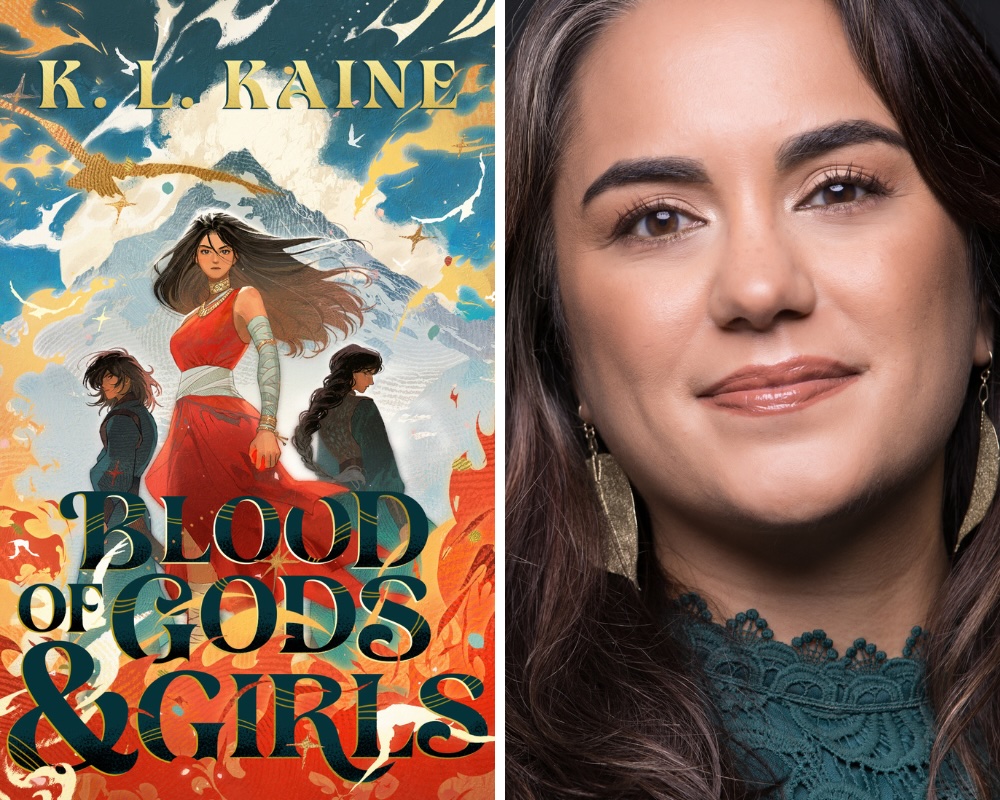
I am half Singaporean and half German, and was born and raised in England. I’ve always felt proud of being this unique blend of ancestry and experience, so it was probably inevitable that it would be reflected in my stories.
I spent childhood summers hanging out in my Gran’s flat in Singapore with my mum and Aunties, where the only air conditioning in 30 degree heat was a ceiling fan and geckos ran around on the walls.
Our relatives in Malacca lived in three-storey houses with central courtyards, and streetcarts sold fresh green coconuts who would hack the tops off with a machete so you could drink the juice.
Other times I travelled to Germany with my father, where we would explore fairytale castles by the Rheine and eat black bread and chewy sausages.
I continued to explore the world into my adult life and visited places rich with ancient culture, such as Egypt, India, Japan and China.
Seeing so many different cultures and learning about their histories and religions, as well as experiencing the architecture, food and hospitality has left me with a deep appreciation for the rich variety of cultures across the world.
It has also made me see how similar people are across the world, and how our shared histories are constantly overlapping, influencing each other and evolving in new ways.
Recently I’ve realised how much of my worlds are built from my own memories, and I’d be hard pressed to even say specifically where some of the ideas came from, as many of them are blended from multiple rituals and cultures I’ve seen in different places.
But I do remember one experience which was probably one of the first sparks that resulted in the fiery story which is Blood of Gods and Girls.
Erased Egyptian Pharaohs
In my twenties I visited Egypt, where I learned about the Pharoah Hatshepsut – a female Pharoah whose statues and carvings were systematically destroyed and defaced after her death.
This was the first time I was confronted by the concept of women being deliberately misrepresented in or erased from history.
Before that, it had never occurred to me that there ever might have been a female Pharoah. I’d just assumed they were all men. Men consistently hold all positions of power, and we’re so used to it, it just seems ‘natural’.
And we have been told relentlessly that women aren’t suited to rule, or we don’t want to rule. Surely, if we wanted it, we would be doing it, right?
Finding out that there had been attempts to remove Pharoah Hatshepsut from the historic record made me wonder what would have happened if they had been successful … we might never have known she existed.
Then I thought – what if there were others, who were successfully erased?
The fact is that there have been, and we will never know how many.
By erasing female leaders from our collective memories, we limit our ability to imagine female leaders in the future. Or right now. And all human endeavour begins with an idea. If we can’t imagine it, we can’t do it.
There is a direct line leading from Hatshepsut’s statues being destroyed to the fact that today instead of male to female leaders being 50/50 as they should if they were representing the population – as would be natural – there are only 14% world leaders who are female, to 86% male.
Goddesses in Itty Bitty Living Spaces
I’ve practised yoga and meditation for about fifteen years, and when an opportunity arose to attend a yoga retreat held by my favourite yoga teacher, in a Buddhist Monastery in Nepal, I knew I couldn’t miss it.
While researching the culture of Nepal, I came across the Living Goddess tradition, and was immediately captivated.
It reminded me of the genie in Aladdin, who is an all-powerful being, but is still a slave, trapped in a tiny lamp and subject to the whims of his master.
In this case, the power of a Goddess – a being who by rights should be terrifyingly strong, is utterly disempowered and trapped in a helpless child who has no agency over her own life but is controlled by male priests. It’s the perfect cage, and then, as a final sleight of hand, we are told this is a great honour.
It struck me that it was the perfect metaphor for what patriarchy does with women’s power.
I had the overwhelming urge to free the Goddess from her prison and return her to her position of awesome, wild, furious glory.
Maiden, Mother, Crone
Some of the concepts in the novel come from closer to my birth home.
In the novel, females can hold three possible statuses – chunu, wyve or prayoga. These correlate with the archetypes of maiden, mother, crone, which I learned about as part of European traditions growing up.
In Blood of Gods and Girls, when females are born, they are the property of their fathers, who place a torc (a metal band) around their necks with the man’s name on, as a symbol of their ownership. When the woman is married to her ‘Master’ he adds his name to the torc, as he is now her legal guardian or owner. As well as the change of name on the metal band she wears, a woman’s status changes the day she gets married.
This is representative of traditions which still survive today, where a woman’s status changes when she gets married, from ‘Miss’ to ‘Mrs’ and she changes her surname to that of her husband. While women are no longer considered the legal property of their husbands as they once were, this change in status and erasure of identity remains unchallenged.
Blood of Gods and Girls is an exploration of these ideas, cultures and traditions, blended together into a new, fiery fantasy adventure, perfect for readers looking for their next coming-of-rage fantasy.
Blood of Gods and Girls is published by Penguin on 2 July 2026
Katja Kaine is a Yorkshire-based writer of fantasy novels. She is also the creator of the Novel Factory software for writers and the Novel Writing Roadmap. She has won multiple awards for writing, including the Northern Writers Northern Promise Award, the SCBWI Undiscovered Voices competition and been shortlisted for the Bath Children’s Award and the Write Mentor Novel-In Development Award. Katja is half Singaporean and half German and when she’s not writing can be found cooing over forest fungi, bending into pretzel yoga shapes and raging against the patriarchy.
https://www.katjalkaine.co.uk/ | Instagram: @katjalizabethk/ | Facebook: https://www.facebook.com/katjalkaine | https://substack.com/@katjakaine