Caroline Cauchi: The Titanic’s “Unlucky” Daughter and the Story Beyond the Curse

Everyone thinks they know the story of the Titanic: the “unsinkable” ship, the iceberg, the orchestra playing as the decks tilted towards the Atlantic. More than a century later, the disaster still grips our imagination. But the story of the Titanic didn’t end in 1912. It continued in the lives of the people left behind.
While researching, I kept returning to someone who wasn’t on board that night: Captain Edward John Smith’s daughter, Helen “Melville” Smith. She was fourteen when the Titanic sank on 15 April 1912, and her father was among those who went down with it. Overnight she inherited not only personal grief but a public identity she had never asked for – the captain’s daughter, permanently linked to history’s most famous maritime disaster.
In the years that followed, Melville’s life was marked by a series of tragedies. In 1930 her husband died in a gun accident. The following year her mother was killed after being struck by a taxi in London. During the Second World War her son was killed in action, and in 1947 her daughter died of polio. One tragedy might be chance. Four start to look like a pattern. Before long, newspapers described Melville as “unlucky”. Some even spoke of a curse. Had the Titanic cast a shadow over Captain Smith’s daughter’s life?
It’s easy to see why the idea took hold. When enough misfortune gathers around one person, we instinctively look for meaning. A curse offers a kind of explanation – a story that makes random tragedy feel easier to understand. But the more I learned about Melville, the less convincing that explanation became. She didn’t live like someone marked by fate. She learned to fly planes when aviation was still daring and new. She drove fast cars, moved in lively artistic circles, and remained active in the world around her. For a woman of her generation, particularly one so marked by loss, the expected path might have been quiet retreat. Instead, Melville chose movement. She kept living – fully, visibly, and without apology.
While writing the novel, I kept returning to that defiance. Melville endured extraordinary grief, yet she refused to let tragedy become the centre of her life. The world seemed determined to see her through the lens of disaster – first the Titanic, then the losses that followed. But she refused that script.
More than a century after the sinking, Melville’s story reminds us that tragedy may shape a life, but it doesn’t have to define it. History records the disasters – the headlines, the losses – but the decades that follow are where a person decides how they will live. And that’s the story I wanted to tell in Daughter of the Titanic: that Melville Smith chose joy, lived with remarkable fullness, and left us with a lesson in how to persist after loss.
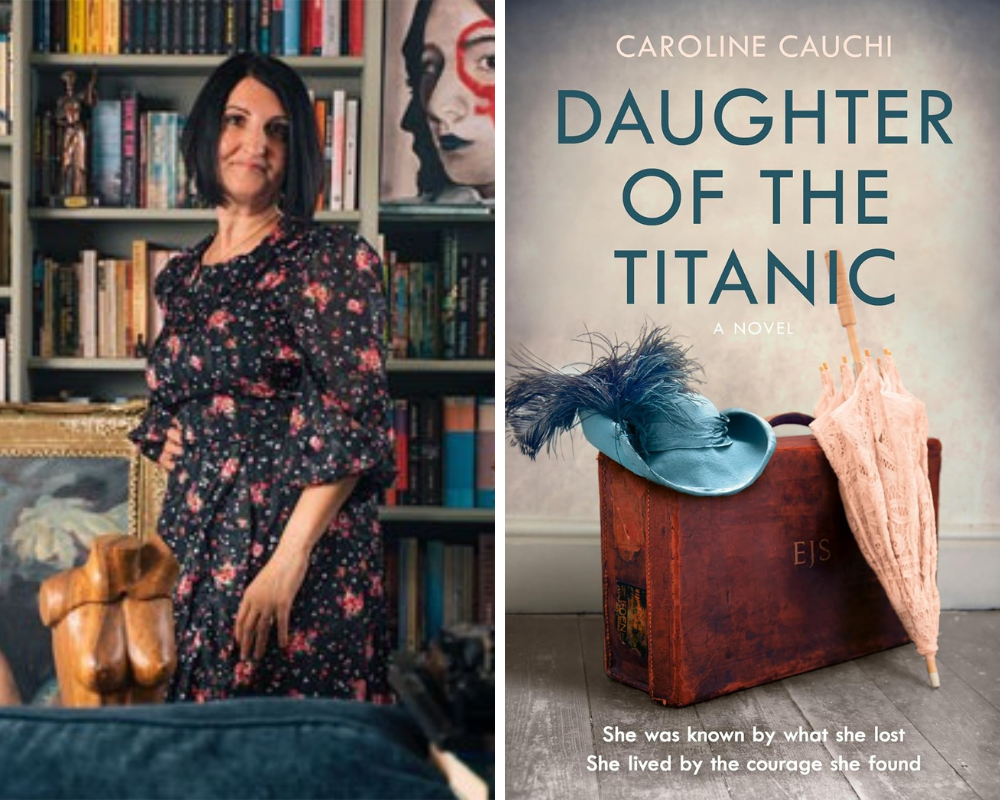
Dr Caroline Cauchi is a bestselling novelist and Reader in Creative Writing at the University of Hull. Her latest novel, Daughter of the Titanic, is published by One More Chapter.