At Night – BFI London Film Festival Review

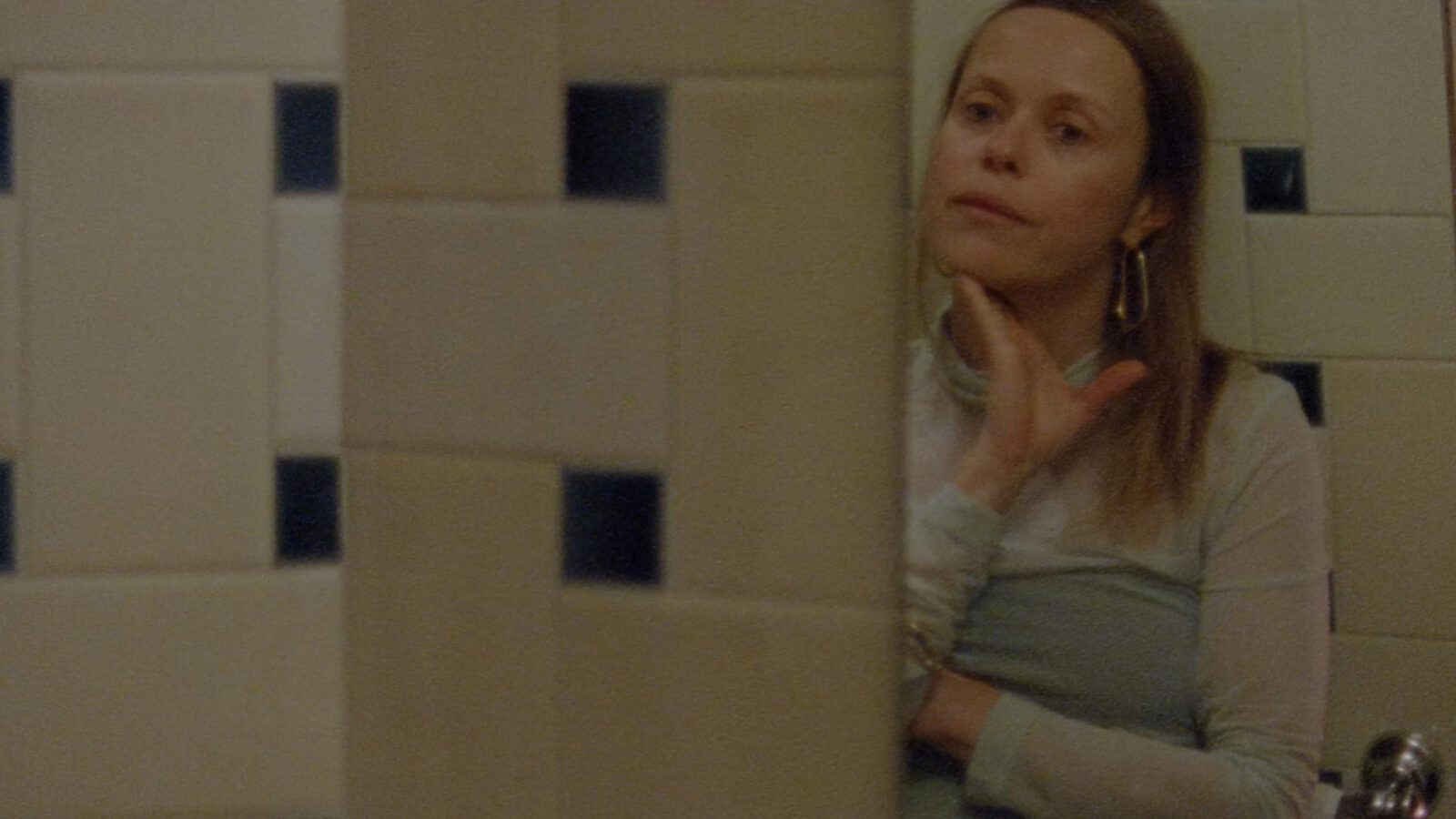
To be a woman alone in a city at night is traditionally something to fear, but not so much in Beatrice Gibson’s solo feature debut. In At Night, Gibson plays one of the six women perambulating around a nocturnal Paris – in a meta move, she is a film director hoping to reconnect with an old friend with whom she had a difficult departure.
That is about as narrative-driven as her movie gets, however. For the most part it is centred around performances, conversations and slam poetry; and ambient moments when the women travel from bar to bodega, sit on the empty metro, or just be.
Gibson’s background is experimental shorts rather than traditional filmmaking, and as such atmosphere takes precedence here. At Night is shot on 16mm film, which gives a fetching soft-edged warmth to the images. While it’s visually appealing, it’s not overtly pretty in the way Paris often is when represented cinematically. It looks like a place where people actually live and work and exist. Equally, there’s an evocative strangeness to the soundscape, particularly in the several scenes set on the Metro, in which the squeal of the train sounds almost musical. Overall, there are parts of Gibson’s movie that feel like a dream, with the texture of a lived reality.
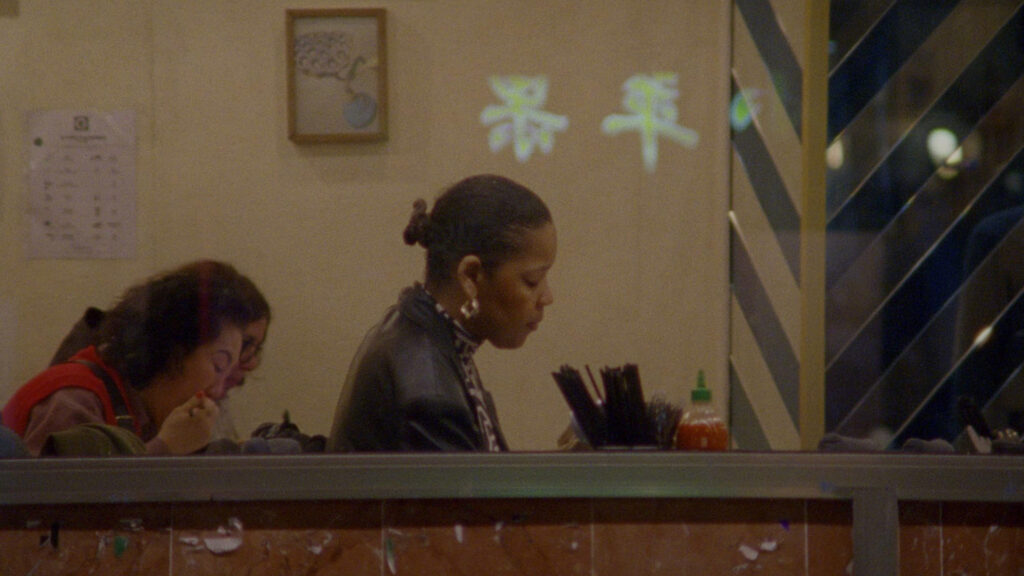
In place of a traditional narrative, what occupies At Night’s runtime is largely conversation. Sometimes it feels like a cinematic adaptation of Rachel Cusk’s Outline Trilogy, or like some of Richard Linklater’s movies where his characters talk their way around a city. That these conversations are taking place among women in mid-life lends Gibson’s film a different quality.
An early centrepiece is a scene that lasts ten minutes and features most of the ‘main characters’ sat together in a bar, having a free-flowing discussion about sex, getting older, and what family looks like for them. Throughout the entire duration, Gibson holds close on their faces as they both talk and listen, tracking amusement, discomfort, interest, and thought. There’s an intimacy than comes from nighttime chats that just isn’t there in the day, and it’s lovely to watch that reflected on screen in a way that feels so warm and genuine.

What tension there is here doesn’t come from physical danger (other than in a fleeting moment late on), but from Gibson’s admirable commitment to making her film an intersectional one. As she said in an interview with the BFI, “One woman’s liberation can be another’s oppression, and vice versa”. The overall tone of these conversations remains empathetic and convivial, yet there are moments of discomfort – primarily in the exchanges between her (white) character and a Black friend who had also been her employee – which are embraced rather than brushed past. Though we have many concerns in common, women are not a hegemony, and the film explores those differences as much as it does the universalities.
While At Night is plotless, there’s still an awful lot going on during this nocturnal journey through the Parisian streets.
★★★★