Máire Zepf on why verse novels break down barriers for reluctant readers

The first time I opened the pages of a verse novel, I didn’t know what to expect. We all come to poetry with baggage. For some, there is actual fear – that it will be too complex, too clever, too opaque. It triggers the exposed schoolchild within, who doesn’t have a key to this code. For me, as a committed poetry-lover, there was confusion – how can it be both poetry and a novel? It felt like someone offering me anchovy ice-cream or a chocolate omelette.
But two pages into Sarah Crossan’s The Weight of Water and I was hooked – for life. The flow, the raw intensity, the vividness of the scenes. I was there, in the character’s head, thinking her thoughts. All the fat had been trimmed away, leaving only the most perfect and necessary words. It felt more like osmosis than reading. A love of the verse novel form was born – a love that I now have from the other side too, as an author.
Technically, I think verse novels are probably neither poetry nor prose. They are usually written in free verse, straddling a liminal place between the two. As a writer, I can best describe it as writing in 3D rather than 2D. As well as meaning and sound, we have the shape of the text to play with and mould. The prose guardrails are off, and the words can be choreographed: dense or sparse, dancing across the page or standing in regimented rows. Pace can be fine-tuned through use of space – an element that suddenly gives the writer a whole new colour to paint with.
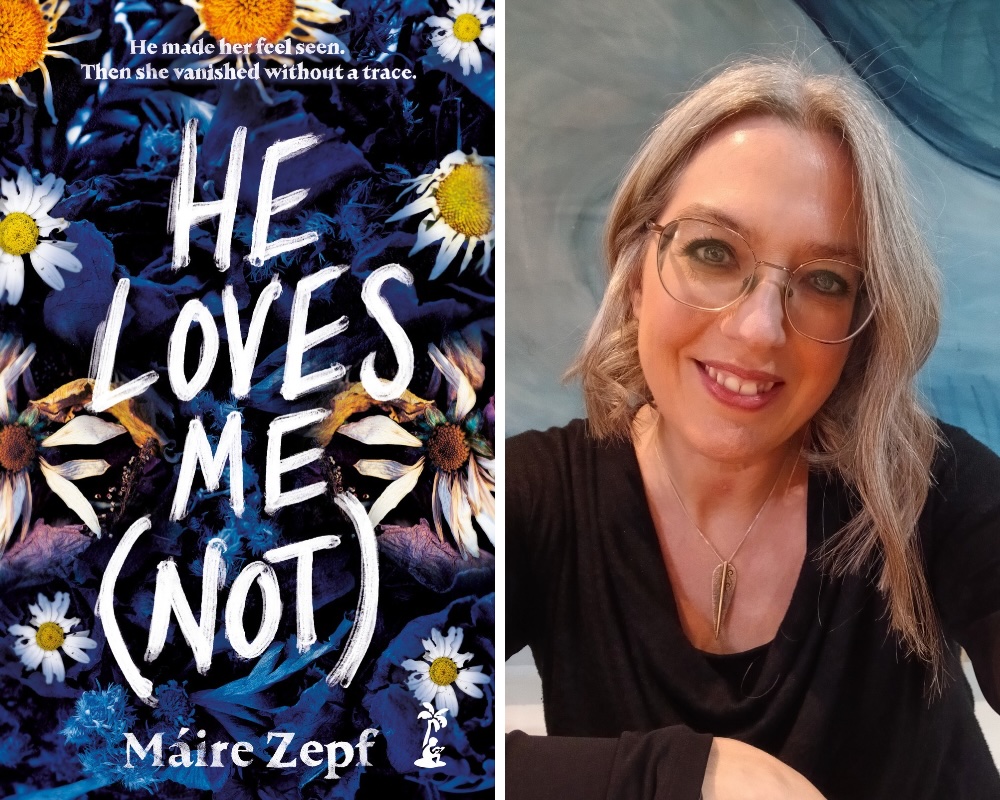
When I was writing He Loves Me (Not), Daisy’s voice arrived first. First person and present tense – we are in her head in real time as she navigates the intensity of teenage life and falling in love for the first time. The form allowed me to embody her in a way that can be trickier in prose.
Her story is a dark one – heartbreakingly dark – and for some reason, this worked better for me in verse. I realise now that I’m not alone in this. Many verse novels tackle difficult subjects: grief, abuse, violence, trauma. Something about the concentrated language and intensity of the verse novel means that the emotional sucker-punch can be delivered with fierce gentleness.
The next surprise for me came when I realised that verse novels might be the reluctant reader catnip we have all been searching for, particularly with teenagers. Word counts are low, pages turn quickly and the plot unfolds at the pace of TV. That osmosis I felt the first time I read a verse novel is exactly what readers who find reading difficult need. Again and again, I hear about young people who thought books weren’t for them, who have a verse novel pressed into their hands by someone who cares – and who then devour it.
They describe that strange, wonderful feeling when you don’t realise you are reading anymore. Your brain has fused with the characters and you are simply there with them. Their shock and surprise when they reach the end is a joy I will never tire of.
There is no magic bullet that will engage every young person who has dismissed reading for pleasure. But this book-form is definitely worthy of a prominent place in our armoury. And as it happens, narrative poetry is one of the oldest genres in the world. The verse novel may feel like a new trick, but perhaps it is really an old one we are rediscovering – one with enduring powers that may work its magic in our new age of short attention spans.
He Loves Me (Not) is published by Little Island Books on 8 October 2026