Sophie Anderson on what fairy tales mean to her
I fell in love with fairy tales at a young age, thanks to my grandmother, Gerda Salewski. She was from Eastern Europe and like many people, lost everything during the second world war – her family, friends, home and country. After the war, while trying to build a new life, she met my grandfather, a Welshmen, and travelled to Wales to marry him. She filled her new home in Pontypridd with the foods, music and stories of her homeland. I especially loved the stories.
Some of my earliest and most treasured memories are of my grandmother telling me Slavic fairy tales, whilst playing a dramatic soundtrack to them on her piano. I would be captivated by the beautiful music and language, the enchanting and eerie atmosphere, the magic and wonder, the balance of light and dark, the larger-than-life characters and the way that these tales explored big universal ideas about life, love and death.
My grandmother’s stories seemed to cover everything important – joy and sorrow, courage and fear, danger and safety, trust and betrayal, power and oppression, and so much more – all were contained in these short yet vast, magical tales.
With the opening words, Once Upon a Time or Beyond Thrice Nine Lands, I would be whisked away to an enchanted realm, long ago and far away, where anything was possible and nothing was certain – except that by the end of the tale I would return to the real world a little different then when I set off. Perhaps I would feel braver, having endured a terror; or perhaps I would be wiser, having solved a conundrum, or learned something new along the way.
Fairy tales are a wonderful vessel for learning. They spark our imaginations, capture our hearts, and help us to make sense of the world and what it means to be human. The lessons and messages these stories contain are as varied as the tales themselves and the people who enjoy them. Deeply rich in symbolism and metaphor, fairy tales can be interpreted in seemingly endless ways. This is part of their magic – the way they can mean different things to different people at different times, and this versatility means that everyone, of every age, can engage with these tales both intellectually and creatively.
I especially love how fairy tales invite everyone into a playground of story. These tales have always been told, retold and reimagined, to become relevant and exciting to new audiences, and I believe this in itself carries a powerful – and empowering – message: that we can change and shape the stories we tell, and in doing so we change and shape ourselves, society and the world.
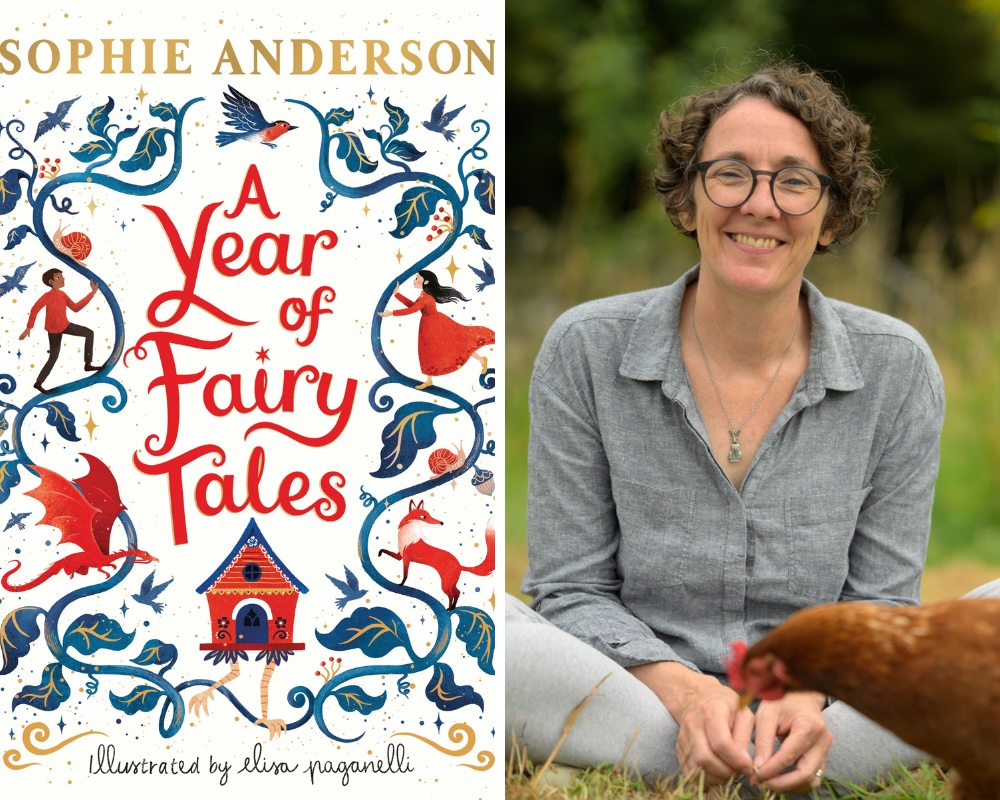
Sophie Anderson is a renowned children’s author whose writing is inspired by folk and fairy stories, especially the Slavic stories told by her Eastern European grandmother. Her bestselling novels have won multiple prestigious awards and been translated into twenty-five languages. The House with Chicken Legs, a reimagining of the Baba Yaga tale, has gone on to become a modern classic, taught in schools and adapted for the stage by Les Enfants Terrible. Her latest book, A Year of Fairy Tales, illustrated by Elisa Paganelli, fulfils Sophie’s long-held dream of creating a fairy-tale gift book in honour of her grandmother.
A Year of Fairy Tales by Sophie Anderson, illustrated by Elisa Paganelli, is out now in hardback.