The Summer Book Review

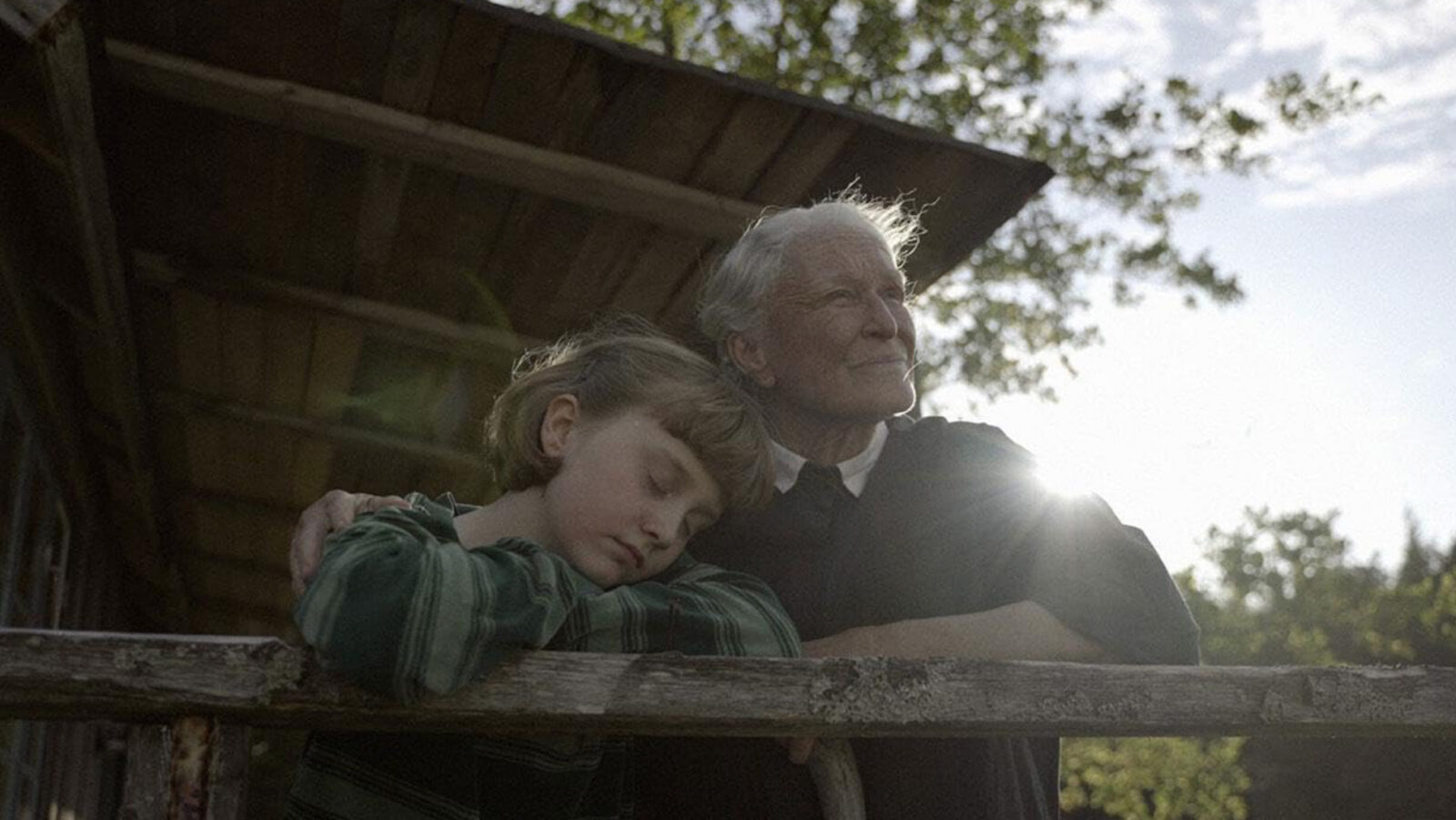
The 1970s. Three generations spend the summer in a cabin on their tiny Finnish island: nine-year-old Sophia (Emily Matthews), whose mum has died; Sophia’s grieving illustrator father (Anders Danielsen Lie), and his spirited but ailing elderly mother (Glenn Close). Although the family has been fractured by bereavement – we aren’t told when it happened, but it appears to be fairly recent – spending time together over the summer helps them find their way back to one another.
The Summer Book is based on the 1972 novel of the same name by Swedish author Tove Jansson, best known for creating The Moomins. Both the novel and the film are low on event, instead propelled by quiet conversations and gentle communing with the natural world that surrounds the picturesque cabin.
For much of the movie, Sophia’s father (neither he nor her grandmother are given an actual name) is a distant figure. While it’s not stated explicitly, there’s an implication that she reminds him too much of her mother, and he finds it hard to be around her. She’s too young to understand that of course, and just experiences the loss of his presence as a compounding of the loss of her mum’s. As such, most of The Summer Book revolves around conversations between Sophia and her grandmother, who is determined to fix the bond between her son and his daughter before she isn’t around to help any more.
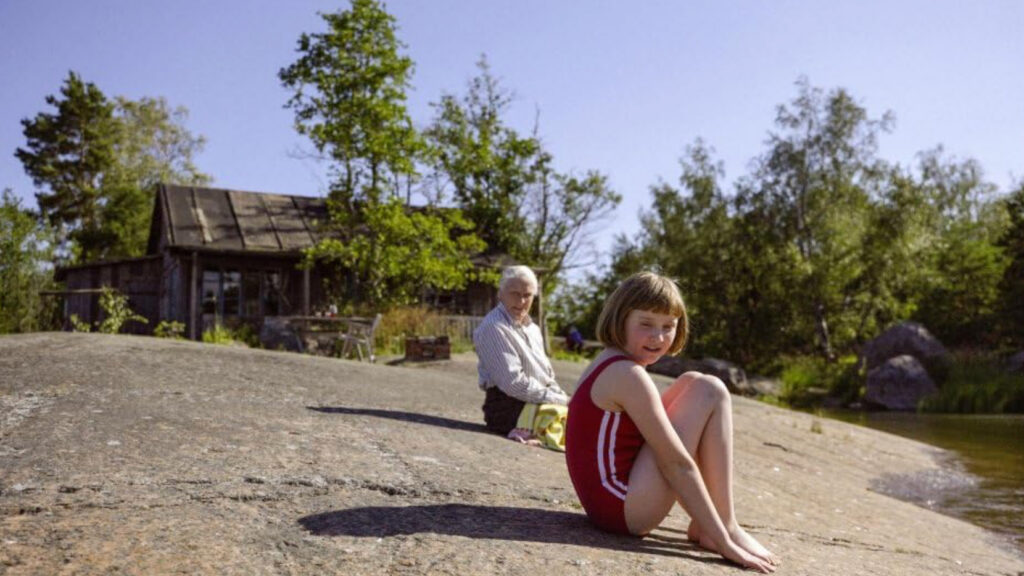
Acting opposite Glenn Close would be a daunting prospect for any grown adult, so it’s no surprise that ten-year-old Emily Matthews struggles, in a performance that rarely expands beyond the twin modes of relentlessly inquisitive or grouchy (the screenplay doesn’t do her any favours there either). When much of The Summer Book is reliant on the relationship between the two, that the pairing is so uneven does take something away from the movie’s ability to portray the emotional landscape of this fractured family in the necessarily subtle, convincing way. Though it’s integral for the story, it still seems a shame that terrific Norwegian actor and Joachim Trier muse Anders Danielsen Lie spends much of the movie sidelined – it would have been nice to see him share more scenes with Close.
Nevertheless, as the movie progresses on its quiet, unassuming path, it becomes apparent that something is working correctly here, even if it isn’t immediately apparent. Gradually, the dynamics shift, and you can feel a breaking down of barriers and a drawing closer, despite the general absence of grand action. And by the time we get to The Summer Book’s sole overtly dramatic scene, a three-generational embrace lands with surprising poignancy.
And even before that payoff, in the spans of time when it seems as if The Summer Book is just spinning its wheels, Hania Rani’s beautiful score and Sturla Brandth Grøvlen’s ravishing cinematography mean that the film is always pleasing to look at and listen to. There are worse ways to spend 90 minutes than a vicarious trip to a picturesque Finnish island, after all.
★★★